Japanese court upholds order to dissolve Unification Church
Background and Origins of the Unification Church
From 1954 Founding in South Korea to Global Expansion and Controversial Practices
The Unification Church, formally known as the Family Federation for World Peace and Unification, was founded in Seoul, South Korea, on 1 May 1954 by Sun Myung Moon. Moon, born in 1920 in what is now North Korea, claimed to have received a divine revelation at age 15 that he was tasked with completing the mission of Jesus Christ by establishing God's kingdom on Earth. The church's core theology centres on the idea that the Fall of Man occurred through sexual sin, and Moon positioned himself as the "True Father" who, with his wife Hak Ja Han (the "True Mother"), would restore humanity through mass weddings known as Blessing ceremonies.
The movement grew rapidly in South Korea during the 1950s and 1960s amid post-war reconstruction and anti-communist sentiment. Moon's teachings blended Christianity with Confucian values and anti-communist ideology, attracting followers who saw the church as a bulwark against communism. By the 1970s the Unification Church had expanded internationally, establishing a presence in Japan, the United States, and Europe. In Japan it gained particular traction in the 1970s and 1980s, partly due to aggressive recruitment and fundraising tactics.
Controversies emerged early. Critics accused the church of brainwashing recruits, breaking up families, and using deceptive fundraising methods. In Japan, where the church developed a significant following, allegations surfaced that members were pressured into donating large sums of money and purchasing expensive religious artefacts. The church's mass weddings, involving thousands of couples matched by Moon, drew widespread media attention and criticism for undermining individual choice in marriage.
Moon was convicted of tax evasion in the United States in 1982 and served 13 months in prison. Despite legal setbacks, the church continued to grow, building a global network of businesses, media outlets (including The Washington Times newspaper), and educational institutions. In Japan it operated under the name Tōitsu Kyōkai and built a substantial financial base through donations and sales of religious items.
By the 1990s and 2000s the church faced increasing scrutiny in Japan over claims of coercive fundraising and spiritual sales practices. Families reported relatives donating life savings or taking out loans to meet church demands, prompting lawsuits and public backlash. These issues laid the groundwork for later legal action that would culminate in the 2025 dissolution order.
Categories: Unification Church History, Sun Myung Moon, Japan Religious Groups, Blessing Ceremonies
Keywords: Unification Church founded 1954, Sun Myung Moon True Father, Tōitsu Kyōkai Japan, spiritual sales controversy, mass weddings Unification Church
Japanese court upholds order to dissolve Unification Church
The Assassination of Shinzo Abe and the Path to Dissolution
2022 Shooting Triggers Investigation Leading to 2025 Supreme Court Ruling
On 8 July 2022 former Japanese Prime Minister Shinzo Abe was assassinated during a campaign speech in Nara. The gunman, Tetsuya Yamagami, later told police he targeted Abe because of his perceived links to the Unification Church. Yamagami's mother had donated tens of millions of yen to the church, bankrupting the family. He believed Abe had supported church-linked events and sought to punish the politician for those ties.
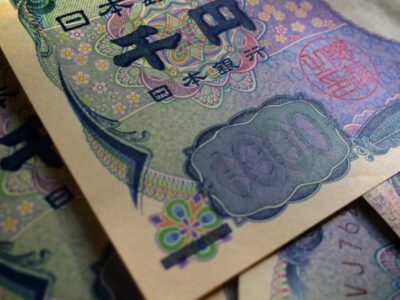
The assassination exposed deep public anger toward the Unification Church in Japan. Investigations revealed that thousands of Japanese followers had donated vast sums—estimated at over ¥123 billion (about $1 billion) between 1980 and 2021—often under pressure to buy religious artefacts at inflated prices. Many families reported financial ruin, mental health crises, and broken relationships as a result of church involvement.
In October 2023 Japan's Ministry of Education, Culture, Sports, Science and Technology filed a dissolution request under the Religious Corporations Act, arguing the church had engaged in "malicious" and "illegal" activities causing widespread harm. The Tokyo District Court granted the request in October 2023, but the church appealed. The Tokyo High Court upheld the order in June 2024, and on 25 March 2025 the Supreme Court of Japan issued its final ruling, unanimously confirming the dissolution.
The Supreme Court found that the church's fundraising practices constituted "acts significantly deviating from the purpose of religious activities" and caused "serious damage to public welfare." The ruling strips the church of its religious corporation status, meaning it loses tax-exempt privileges and must re-register as a general incorporated association if it wishes to continue operations legally. While members can still practise their faith, the organisation faces severe financial and operational restrictions.
The decision marks a rare use of Japan's dissolution law, previously applied only to Aum Shinrikyo after the 1995 sarin gas attack. It reflects growing public and political pressure to address coercive practices by religious groups. The Unification Church has stated it will comply with the ruling while continuing its religious activities under a new legal structure.
Categories: Unification Church Dissolution, Shinzo Abe Assassination, Japan Religious Law, Fundraising Controversy
Keywords: Unification Church dissolution 2025, Shinzo Abe assassination 2022, Tetsuya Yamagami motive, Japan Supreme Court ruling, Unification Church Japan tax-exempt loss